THE story of little Annie, the girl weeping in a miserable room off Mary King’s Close, all alone in the world after her whole family had perished from the dreaded plague, has touched the hearts of many.
Hers is just one of many tales of apparitions and hauntings in the Old Town’s legendary buried street. For years, tour parties have heard chilling accounts of horrific suffering, of the doomed souls incarcerated in a pit of death, disease, decay and
starvation when plague struck, and of the notorious fire of 1750.
But now the Continuum Group, which has won the contract to operate tours of the close from Easter 2003, is setting the record straight, and separating fact from fiction. For the first time, visitors will learn of the real people who lived in the close, their living conditions and trades.
"We want to interpret the real story about Mary King’s Close and the other closes in the area - Pearson’s, Allan’s, Stewart’s, Craig’s," explains project manager Dr Lorna Ewan, of Past Forward, the design and project management component of the Continuum Group. "There are three current urban myths that we would like to dispel.
"First, the Close went through a series of names - Tower’s Close, Livingstoun’s Close, Alexander King’s - before it became known as Mary King’s, and there has always been an assumption that Mary King was the daughter of Alexander King. But there’s no evidence that they were related in any way.
"Second, there’s no evidence of a fire in 1750. And third is the myth that during the plague, people were locked in and left to die. It’s simply untrue. Edinburgh’s Burgh Council quarantined the area and handed out rations of food to people and two plague doctors were appointed. People were supplied with bread and ale."

If a family suffered a death from plague, the rest of the family were quarantined and sent to either Sciennes, King’s Park (now Queen’s Park) or Boroughmuir. "We have identified one family - the Craigs - who lived in Mary King’s Close," says Dr Ewan. "The father, John Craig, was a gravedigger and he died of plague. A coffin was ordered for him and the rest of the family went to Sciennes into quarantine. The wife, Janet, and three children, John, Robert and Thomas, all got the plague, but we don’t know if they died or what happened to them after that."
As for Mary King herself, who lived at the head of the close, Dr Ewan’s investigations have discovered that she lived in a house with a turnpike stair - so therefore higher than ground floor level - and owned gold rings, silver spoons, gowns, considerable quantities of fabric, ruffs, two tin chamber pots, fire irons, a velvet doublet, a bolster, a wooden settle and other possessions. All of which suggest she was reasonably well off and possibly traded in fabric. "She certainly wasn’t the poorest of the poor," says Dr Ewan. "But she did owe money in rent to her landlord, James Bannantyne, when she died. The rent due for a year on Mary King’s house was 100 merks, which is £66 13s 4d Scots, which was then approximately equivalent to £5.50 sterling."
Mary married Thomas Nemo, a merchant burgess, on August 15, 1616 (women at that time did not customarily take their husband’s surname in marriage) and had four children, Alexander, Euphame, Jonet and William. She was widowed in 1629 and died in September 1644, shortly before the plague outbreak (which persisted from Christmas 1644 to autumn 1646). "We cannot assume she died of the plague," says Dr Ewan.
But how have Dr Ewan and her team been able to piece together - for the first time - the lives of the people who lived in Mary King’s and the neighbouring closes?
For a start, they have spent 14 months wading through mountains of records from a variety of sources, including the City Archives, the Scottish Record Office, the National Library, the National Museum of Scotland and Historic Scotland and have called in a host of experts, including Edinburgh company Kirkdale Archaeology, as well as academics and historians.
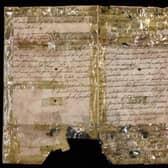
Detailed cross-referencing between testaments, taxation rolls (which provide a record of landlords and tenants), solicitors’ protocol books, centuries-old maps, poll and hearth tax records, censuses, marriage banns, death certificates and other documents has enabled the team to piece together a jigsaw of the closes’ history, their inhabitants and what they would have looked like through the centuries.
"It’s an exercise in pure research," says Dr Ewan. "What we are about is establishing the most accurate interpretation of events. The magic of the real is what we want to give people a chance to enjoy."
The most famous area, known as the Little Girl’s Room, off Allan’s Close, is where a renowned Japanese psychic felt the presence of eight-year-old orphan Annie in 1992 and said it was the saddest place she had ever experienced. Ever since, visitors have left dolls, toys and letters, to alleviate Annie’s loneliness. But Dr Ewan says it is also interesting for other reasons.
"Historically, it is very significant," she explains. "It is an almost unique survival of spaces which show remnants from the 17th, 18th and 19th centuries and we can visualise the spaces and the status of the accommodation, which deteriorated over the centuries. There is evidence of block print foliage decoration and wood panelling from the mid-18th century. We know that in the 17th century, the area was two rooms and it was split into four rooms in the 18th century.
"The closes became more crowded in the 18th century and the majority were tenanted. Mary King’s Close was phenomenally overpopulated at the end of the 18th and the beginning of the 19th centuries. When the New Town was built, landlords and those who had money moved out of the Old Town.
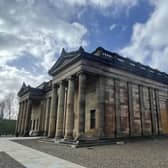
"The Royal Exchange building - now the City Chambers - was commissioned in 1753 and when it was built, most of the closes were covered over. Mary King’s was fully covered over later; far more of it has survived than the other closes. The last person to leave Mary King’s Close was a sawmaker named Andrew Chesney, in 1901."
She continues: "Living conditions varied immensely. If you happened to be well-off and have a complete townhouse, you might have carved oak panelling on the walls, expensive fabric hangings, exquisite furniture and very elegant clothes. "If you lived in a lower laiche house, you were pretty badly off and lived in dark, smelly conditions. The better off you were, the higher up you lived, both up the building and up the close. People threw all their rubbish and waste down and everything ran down to the Nor’ Loch and down the Royal Mile to Queen’s Park - which is why it is so fertile today. There are all sorts of stories about the people who lived in the Cclose."
It is not known if people were compensated or what happened to those who had to uproot and move out when the City Chambers were being built, but Dr Ewan suspects it wasn’t a simple case of building over the Closes and people being turfed out on to the street, homeless. "Scottish Law has always seemed surprisingly democratic," she says.
All this research will mean that when the new tours start later this year, they will deal more in fact than the supernatural - although Annie’s story will be preserved. Historical accounts of other characters who lived in the closes will also be told as will the evolution of the buildings themselves, some of which soared from six storeys to up to 11 during the population peak.
Visitors to the underground attraction will take a step back in time and glimpse life in the 16th century, through the plague-ridden 17th century and into the 18th and 19th centuries, with tour guides in character and costume.
New spaces and stairways have been opened up for the first time - 60 per cent more can be seen than in previous tours. Illustrations of the interiors of some of the houses will also be displayed, together with information boards, flip books and a 3D computer visual of the whole area.
"The haunting side is just one aspect; it’s by no means the whole story," concludes Dr Ewan. "We’ve put together a much broader historical story covering 500 years that has never been told before, based on rigorous archaeological and historical research.
"What nobody had recognised was how important these spaces are in terms of Edinburgh’s history. You could spend your whole life researching it."