When less is moor: New Culloden visitor centre opens
Video
Video from National Trust Scotland on the new Culloden
Published Date:
10 April 2008
By TIM CORNWELL
THE dogwalkers have Culloden Battlefield to themselves this afternoon, almost 262 years after the claymore-wielding Scottish clansmen were shredded by the Duke of Cumberland's cannon and shot.
A strong breeze is blowing a spray of rain across Drumossie Moor. Sheltered in the lee of the brand-new £9 million visitor centre, a couple walking a well-brushed sheepdog say brusquely they are "not very favourable", and "disappointed by all the time spent on it".
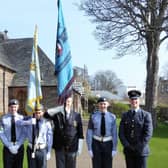
On the far side of the field, near the bold blue flagpoles that mark the Jacobite lines, the owner of a black Labrador takes a more sanguine view. "Very stripped down, very simple," he says, looking across to the low walls of grey stone and green-grey local larch. "Very Bauhaus."
Battlefields may be best enjoyed simply, to let the imagination roam, but a little guidance is helpful. The burial cairns remain, but the cement markers dotted around Culloden, ugly though they are, have been stripped of all markings in the battlefield's ongoing revamp.
Visitors are now expected to tour the site with handheld PDAs to tell them where they are and what they're looking at, but at this hour of an off-season afternoon, the counter is closed.
Culloden, as great battles go, was short – about an hour – and with an immediate death toll of only 1,300. But the shattering defeat of the Scottish clansmen and the rout of their Jacobite leaders, including Bonnie Prince Charlie, is an event still shrouded in gloom.
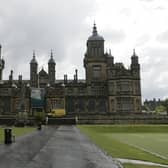
The new visitor centre, which has its official opening on the battle's anniversary on 16 April, aims to revive awareness of the battle. It is vastly more than a ticket office and shop.
In the walk-through museum inside, hi-tech gizmos abound. Stand beneath one of the "hypersonic" sound stations, and the words of a battlefield character, using technology developed for the US military, are whispered into your ears alone.
Outside, however, the side of the building is a simple memorial, with echoes of the Vietnam Veterans Memorial in Washington DC.
Individual but unmarked stones show the Jacobite dead, about 1,250, overwhelming the 50 on the government side. An archway leads directly to the battlefield for those who want to skip the razzmatazz.
"The idea was always to create quite a simple abstract portal on to the battlefield," says architect Gareth Hoskins on a personal tour of the site. "If you don't want to go through all of that, you can go and have a poignant visit. In a sense you don't actually need anything here.
"The beauty is quite immediate. It's a desolate place where you get that feeling."
It was a daunting task to put a building of this size in the landscape and keep it low-profile, he says. One goal was "to keep the palette simple".

The centre's 21st-century take on Culloden brings an interpretation that is a good deal more inclusive than the old version of clans pulverised by English Redcoats.
Alexander Bennett, the National Trust of Scotland's project director, is proud that the very first item on show is a set of bagpipes – used by the McLeods, on the British side. The biggest misconception about the battle, he says, was that it was fought between the English and Scottish – rather than the British government forces, including Scottish soldiers, against Jacobites fighting for a Stuart claimant to the throne.
Bonnie Prince Charlie is also de-romanticised, titled simply "The Prince" in exhibits. "We have tried to go back to his proper title. We have tried to take a little bit of romance out of the story."
The centre is the work of Glasgow-based Gareth Hoskins Architects, who won the commission in a competition in 2004, with the international exhibition designers Ralph Applebaum Associates, who also designed the Washington DC Holocaust Museum.
It's an important dry run for the huge £44 million overhaul in Edinburgh of the Royal Museum, flagship of the National Museums of Scotland, overseen by the same team.
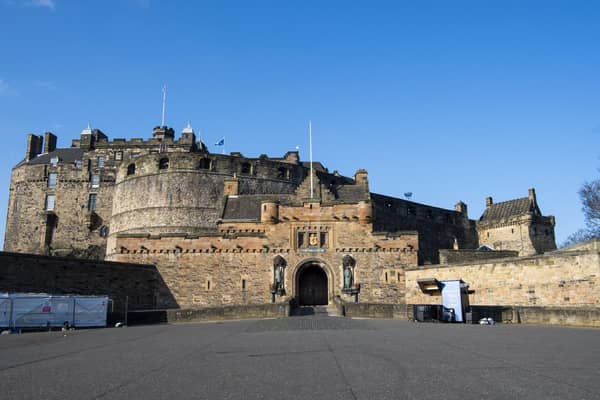
Underlining his firm's role in Scottish cultural architecture, Hoskins also recently completed the strikingly new ticket office at Edinburgh Castle, a sharp-edged, metal-faced triangular building that makes no concessions to faux-medieval stonework.
The first sight of Hoskins's centre, on the short drive from Inverness to the battlefield, is a wooden fence more than 100 metres long. On a gently rising mound of grassy earth, it reaches to the roof of the main building over the arched entrance to the battlefield.
Made from the same pale local larch wood as the centre, it resembles the groynes used on beaches to stop sand erosion. It marks the rear of the British government lines in the battle, but also shelters the sight of the car park, and its tour buses, from the battlefield – and the remains of the old visitor centre, a still-gaping hole in the earth.
The building's carbon footprint has been reduced by a clean-burning biomass heating plant fed by woodchips from the nearby School of Scottish Forestry.
"This is one of the most popular places in Scotland after Culzean," Hoskins says. "The tendency is for the shop to take over."
Coach parties were said on average to make around a 20-minute stop at Culloden. The NTS's new goal is for a visitor stay of around two hours.
The 105-seat restaurant, with views to Glen Strathnairn, is faced with untreated larch, and has skylights curving in waves through the steel-framed roof.
The walk-through exhibition weaves back and forth through the building. One corridor recalls the exhausting night march by the Jacobites before the battle, in their failed attempt to take the Duke of Cumberland's soldiers by surprise. Whispered voices come from behind jagged black wall panels – though Hoskins says some visitors don't quite get it.
Other pieces of technology include a filmed reconstruction of the fighting, projected on all four walls of a room. It puts visitors in the heart of the battle – though the film itself is a little clunky. More prosaically, artefacts run from mortar balls to reproduction Brown Bess muskets. Elsewhere formations of blue and red dots move, charge, mingle and withdraw across a billiard-table sized plan of the battle – giving an aerial view of Culloden that its generals never saw.
The historian John Prebble wrote in 1961 that Culloden "began a sickness from which Scotland, and the Highlands in particular, never recovered", one that "emptied the Highlands of people". In his view the battle not only ended the last Jacobite uprising, but ushered in the Highland clearances.
But the exhibit takes a slightly different tack. "The Highland military tradition survived Culloden and became part of the new British army," notes the text in the museum's "aftermath" section.
Jacobite prisoners were indeed deported to plantations in the Americas. "However, the mass emigration from the Highlands later were not directedly the result of the 45 or Culloden." Indeed, with the 19th-century rediscovery of tartan, "Highland symbols conquered Scotland".
'46 and all that
AT ABOUT noon on 16 April 1746 a British government army of over 7,500 men under the Duke of Cumberland faced a force of about 5,500 clansmen, with some French and Irish soldiers, under Prince Charles Edward Stuart.
The Highlanders were exhausted after a failed night march intended to surprise the enemy in their camp. Short of provisions, many men had barely eaten in three days and others had left to forage for food, with rations down to a biscuit a day.
After the two armies took up battle positions, British cannon tore holes in the Highlanders' ranks with round shot and grapeshot.
The Highlanders finally launched their charge. But those on the left faced a long, boggy run to the British lines, under volleys of musket fire. The Jacobites who broke through on the right flank were halted by Cumberland's second line of defence. Bloody hand-to-hand fighting, with the Highlanders outflanked, ended in retreat and total disarray.
Prince Charles ordered his remaining troops to disperse, and spent five months on the run before fleeing to France. Cumberland tacitly approved the brutal killing of Jacobite wounded and fugitives from the battle; nearly 1,000 prisoners were transported.
The full article contains 1383 words and appears in The Scotsman newspaper.
-
Last Updated:
10 April 2008 8:34 AM
-
Source:
The Scotsman
-
Location:
Edinburgh