Help Sitemap Home Skip Navigation Contact Us Disability Statement


Sunday, 6th December 2009

Dangerous cipher that led to the death of a queen

Click on thumbnail to view image

Published Date: 26 October 2006
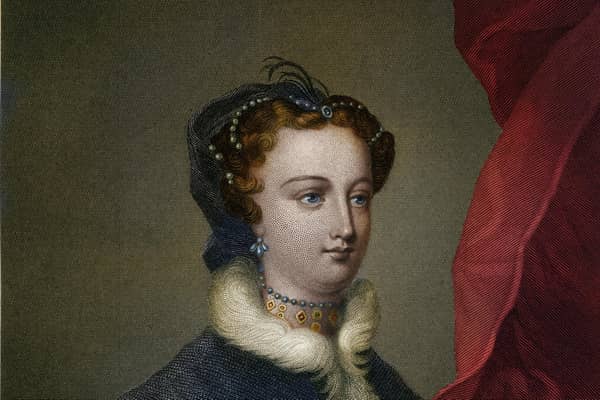
IT HAS all the elements of a best-seller – a Scots-born, French-speaking queen, held prisoner by her powerful English cousin, becomes entangled in a secret plot to dethrone her captor. In her despair she communicates with her supporters with a series of letters written in an elaborate, encrypted code.
Truth can of course be stranger than fiction and history reveals that this is exactly what unfolded in the last days of the tragic life of Mary, Queen of Scots, executed in 1587 on the orders of her cousin, Queen Elizabeth I of England.

Mary had thrown herself on the mercy of the English queen after she was forced to abdicate the Scottish throne in favour of her baby son, James, in 1567. But after an inquiry held that she had plotted with her third husband, the Earl of Bothwell, to murder her second husband, Lord Darnley, Mary became Elizabeth's long-term prisoner.It was not a situation Mary and her supporters were willing to endure. Between 1571 and 1586, numerous plots were hatched to free Catholic Mary and put her in Protestant Elizabeth's place. While Elizabeth was aware that Mary's religious-based support was a continuing threat to her very existence, and strongly suspected there were plots against her, she was reluctant to accuse her own cousin of treason without proof. Events would give Elizabeth the evidence she needed to act.

In July 1586 Mary was a prisoner under the guard of a staunch Protestant, Sir Amias Paulet, at Chartley Castle in Staffordshire when she received a letter from Sir Anthony Babington, asking for her to approve "the dispatch of the usurping Competitor" – in other words, the assassination of Elizabeth.

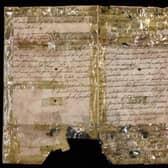
Mary had her letters encrypted by her cipher secretary, Gilbert Curle, and then smuggled out of Chartley in casks of ale. The secret code substituted symbols for letters of the alphabet and also some words. The cipher also included some "nulls", or symbols which represented nothing at all, to confuse anyone trying to decipher the letters.

Unfortunately for Mary, the courier was a Catholic double-agent, Gilbert Gifford, who was also working for Elizabeth's principal secretary and head of intelligence, Sir Francis Walsingham. Everything she wrote was being intercepted and her reply to Babington was passed to Walsingham's master codebreaker, Sir Thomas Phelippes, a Cambridge-educated language specialist.Phelippes, who was fluent in six languages, used a technique known as frequency analysis to work out how to break the code. He started by looking for the symbols used to denote the most commonly used letters of the alphabet – "e" and "a" – and worked from there.

Mary's encryption was not only deciphered, her letter to Babington was also amended; Phelippes shrewdly added a postscript, asking Babington for the names of others involved in the plot. The conspirators were rounded up and executed.

The letters – many of which have survived and are held by the National Archives in London – were used as incontrovertible proof that Mary was actively plotting to remove Elizabeth from the throne. Mary wrote: "Orders must be given that when their design has been carried out I can be ... got out of here."

In her biography, Mary Queen of Scots, first published in 1969, Antonia Fraser records how Elizabeth's emissary, Sir Thomas Gorges, confronted her with the evidence:

"Madame, the Queen, my mistress finds it very strange that you, contrary to the pact and engagement made between you, should have conspired against her and her State, a thing which she could not have believed had she not seen proofs of it with her own eyes and known it for certain."

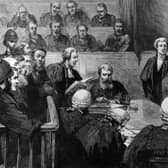
Mary was taken to Fotheringay Castle and tried in October 1586. Her denials were useless against the weight of evidence against her. Elizabeth finally signed the death warrant on 1 February 1587 and a week later Mary was beheaded – the form of execution reserved for the nobility.

Fraser questions whether Mary, who she says was being held illegally, should be judged too harshly for her reply to Babington, which appeared to support his suggestion that Elizabeth should be assassinated, writing: "Her own agreement was entirely in the context of a captive seeking to escape her guards, and may be compared to the actions of a prisoner who is prepared to escape by a certain route, even if it may involve the slaying of a jailer by another hand."

If Mary's secret cipher had not been cracked, Elizabeth might well have been assassinated and a Catholic queen put on the throne of England. The course of British history could have been very different.

But perhaps Mary had the final triumph – her son, James VI of Scotland, became James I of England when Elizabeth died childless in 1603.


Page 1 of 1

 
1

Joanna,

Cambs 26/10/2006 15:13:34

From the article:
"But perhaps Mary had the final triumph – her son, James VI of Scotland, became James I of England when Elizabeth died childless in 1603."

There seems to have been a lot of intense rivalry and female jealousy between Elizabeth and Mary which is even more strange when it is reported that they never met one another. Probably it was because Mary coveted the throne of Elizabeth and the wily 'Virgin Queen' had to keep all her wits about her to keep her throne in the face of fierce Catholic opposition from France, Spain and the Vatican. Or possibly it was because the Queen of Scots was reputed to be a very attractive woman.

In any case this remark attributed to Elizabeth shows good old fashioned, green eyed envy:

"The Queen of Scots is lighter of a fair son, and I am but barren stock."
- Elizabeth I, commenting upon the birth of James VI of Scotland.

2

maria,

scotland 26/10/2006 16:10:02

... so can we have our letters back please ?

- should they not be in EDINBURGH CASTLE ???

3

Peter Mattock,

Yorkshire 26/10/2006 16:27:13

Interesting that Maria should think that a letter written in the English midlands, delivered to the English midlands and concerning the assassination of the English queen should end up in Edinburgh. I don't see the logic.

4

Joanna,

26/10/2006 17:07:41

Maria @ 2

The Babington Plot which this article is about was the event which most directly led to the execution of Mary Queen of Scots.

The Babington plot was not a Scottish plot to liberate Mary Q of Scots. There was never any wholly Scottish plan to free the imprisoned Queen. The people who conspired to free her were mainly English, Scottish and Spanish Catholics who were trying to depose Elizabeth - the Protestant Queen.

The Babington Plot is named after the chief conspirator, Sir Anthony Babington (1561–1586), a young Catholic nobleman from Derbyshire.

So, there is no reason why the letters should not stay in England and your comment seems to be devoid of any facts.

Or are you confusing this with the Casket Letters - supposed to have been written by the Queen and Bothwell - when she was still at liberty and implicating her in the murder of her husband, Darnley? There has always been speculation as to the authenticity and provenance of those particular letters. If they ever existed and were not forgeries it is thought by some that Mary's son James VI had them and destroyed them himself, to protect the memory of the mother that he never knew.

5

Russell M,

Stirling 26/10/2006 18:21:43

Another example of the human frailties even of monarchs. Man does not have the wisdom or temperament to rule over his fellow human beings. Only God is lord over all. Until we rediscover that truth we will struggle.

6

Steve Evans,

Malta 26/10/2006 19:46:23

Yet another headache for the next Holywood Blockbuster, how the hell can we expect them to get around this one!!!

7

maintenancejason,

Bucks County,PA 26/10/2006 19:50:15

If a beheading was reserved for people of nobility, what did they do to the common people?

8

Steve Evans,

Malta 26/10/2006 19:55:51

Answer to 7, A trip to Tyburn if you were in London or the surrounding area.

9

Joanna,

Cambs 27/10/2006 08:48:32

Jason @ 7

The common people of that age were usually hung, drawn and quartered. Which involved hanging them until they were nearly dead, cutting them down, disembowelling, burning their entrails and quartering their body. Nice lot our ancestors were'nt they? These events were always public and they were literally mobbed by our bloodthirsty forebears.

Only the nobility were given the relative speed and leniancy of beheading.

Hello Jean,
We'll have to get a new cast assembled for this one! :D

10

Houssine,

Paris 27/10/2006 11:22:35

Hello,this is a very beautiful story.At that the time what is the thong (language) of Scotisch,gaelic or english? The nobility speak gaelic or english?
Personaly i believ the triumph was for england because today most Scotish was not independant and don't speak the language of his celtic ancestry the gaelic.

11

Sedov,

Scotland 27/10/2006 12:32:19

#10 Houssine, thanks for taking an interest in this subject. As far as I am aware the main language spoken by the Scottish nobility at this time was lowland scots with french also being quiet common Gaelic was imported mainly from Irish settlers in the West coast and the highlands and in my opinion has never been the so called native language of Scotland although I support Gaelic being kept alive. As a person with scottish covenanter blood in me I am very pleased that Mary and the stuarts were defeated and even if they had succeeded there is no reason why Scotland should have been independent from England rather than being a French colony under a Catholic regime. Its a romantic story though but well done Elizabeth and the Scots who defeated her and the Stuarts at dunkeld and culloden.

12

Houssine,

Paris 27/10/2006 12:56:16

Thank you Sedov for your information.If you go to the site www.bretons-de-rueil.com and you clic in photo and video and afther you clic in video you can see a traditionel dance from french celtic reton.The leave of what we name the common poeple is very important for me,i believ the soul of a nation is in this common people.When Scotland will be independant from England i envisage a demand of Scottish nationality for my self.The God save Scotland and his poeple.Your friend Houssine from Paris.

13

Sedov,

Scotland 27/10/2006 19:11:44

Thank you Houssine, my ancestors were celts from Brittany and they came over to cornwall and then to Wales and Scotland to mine and to fish. I have a breton celtic name which originates from France. I am an atheist and an internationalist and I am very much opposed to nationalism and capitilist independence for Scotland which is not an oppressed nation. I believe that only the unity of all the people in the world can save the planet from disaster and nationalism works agaist this as it helps nations to divide and rule. You should know that in fact the French revolution had this very principle. good luck.

14

Joel Howard,

California 27/10/2006 23:08:37

And we all know how the French revolution went. Mass beheadings for the populace, citizen...

15

Chris,

Lyme 28/10/2006 17:36:33

I think it safe to say that most of the English would like to see an independent Scotland.

16

Elizabeth,

Edinburgh 28/10/2006 22:49:25

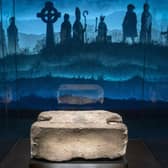
Peter #3 - and nor do I see the "logic" in the Stone of Scone (thankfully now on display in Edinburgh Castle) being ON LOAN TO SCOTLAND from England -

Uhhm, you lot STOLE it FROM US (big bad Edward the Hammer right?) so that we could never sit another Scots King or Queen on it ever gain - no wonder there was such fanfare in Edinburgh on the day of its return - but I assume Peter that you don't want us to get too used to having it in Scotland - for IT'S JUST ON LOAN from Westminster Cathedral. When I visited Westminister and seen the 'empty spot' where The Stone of Destiny had once been, the tour guide was quick to inform us all that " IT WAS ON TEMPORARY LOAN TO SCOTLAND."

Thankfully we have our precious Scottish Crown Jewels - the oldest in Euopre - and we up here have kept your so called Royal Line going for you so don't be too critical of Maria, after all, it's just that we are so used to being treated like second class citizens..

Number 10, there are very few people with opinions like Number 11. Thank you for your insight.

Chris #15 - I hope so.

17

Joanna,

England 30/10/2006 10:44:34

Elizabeth @ 16

"and we up here have kept your so called Royal Line going for you "

Yeah.... thanks for that - you can take them back to your futuristic independent Scotland whenever you like.

You can keep your lump of stone as well - nobody in England is losing any sleep over it - most people don't know or care anything about the thing anyway!!

18

Fiona,

Melbourne, Australia 30/10/2006 22:21:25

#3 & #4

it is entirely arguable that a letter belongs to whom it was addressed. therefore, it is fair to request any letters addressed to Mary QofS be kept in Scotland. The subject of the letters is not at all relevant to ownership.

19

Joanna,

Cambs 31/10/2006 08:47:36

Fiona @ 18

The letters were a 2 way thing - so what do you suggest we keep the Queen's letters to Babington in England and the Scots keep his letters to her. Silly suggestion really ....... and very hard work for any historian researching the period.

Perhaps, you should read up on the history of Mary QofS and you will realise that it was her own half brother the Earl of Moray and other Scottish nobles, the guardians of the infant James, who colluded with Elizabeth's courtiers to keep her incarcerated in England for 18 years. The whole affair was about the religious strife at the time not nationality.

As has already been said - the letters were never addressed to anywhere in Scotland when they were written ... why should they be kept there now?

You are clutching at straws and your suggestion is facile and shows a huge ignorance of the history of Mary Queen of Scots.

20

coully,

dundee 01/11/2006 10:49:38

why is it english people are making comments on this web site the {scotsman}!!! when it is quite clear a lot of you dont know what you're talking about

21

Joanna,

01/11/2006 16:39:56

Martin @ 20

And you do of course.... (Not!)... Btw: this is called the world wide web and that includes England ... so if we want to comment on here we will!!

PS: Don't throw teddy out of the cot, now will you..

22

David C. Findlay,

nr. Linlithgow (Birthplace of Mary Queen of Scots) 03/11/2006 12:44:13

Substituting symbols for letters of the alphabet and also some words, and including "nulls", to confuse anyone trying to decipher the letters was not a very secure method of encypherment. The use of a Polyalphabetical substitution and then a Vigenere table followed by the symbol/letter substitution would have kept Mary's head on her shoulders longer. It would take longer to encrypt and decrypt but would be virtually impossible for the code to be broken by frequency analysis. All the techniques were around in the early 16th century.

23

Joe M.,

03/11/2006 14:17:37

This seems to be an attempt to provide proof for a much disputed historical fact, ie that Mary Queen of Scots (the rightful heir to the throne of England as well) supposedly conspired with supporters to have Elizabeth assassinated.

In fact there is no genuine proof of this, the letters which were provide at the trial were obvious fakes, however it won't be the first time the Scotsman has twisted the facts to suit it's own political ends ie support for the British union at all costs.

There was no 'final triumph' with the union of crowns. The fact that her ambitious son later decided to sell his soul to England by accepting their crown and said his wish was to treat Scotland as 'a distant shire' only shows that he was a traitor to his own folk.

Elizabeth I was clever. Her use of John Knox to Divide 'N' Rule Scotland and seperate us from our allies in Catholic Europe and her cold blooded murder of her rival mean that she will always be venerated by unionists, however she was no friend to Scotland a bit like the Scotsman today.

24

eric,

03/11/2006 16:46:08

Elizabeth did have a Son .She wasnt no Virgin,

25

Joanna,

Cambs 03/11/2006 18:30:02

"Elizabeth I was clever. Her use of John Knox to Divide 'N' Rule Scotland and seperate us from our allies in Catholic Europe and her cold blooded murder of her rival"


Mary should have kept her greedy mitts to herself ... she was Queen of Scotland and France and thought she should be Queen of England. Under the terms of the Treaty of Edinburgh, drawn up in 1560 by the Parliament of Scotland in an attempt to formally end the Auld Alliance, signed by Mary's representatives on July 6, 1560 following the death of Marie of Guise, France undertook to withdraw troops from Scotland and recognise Elizabeth's right to rule England. The eighteen-year-old Mary, still in France, refused to ratify the treaty.

Mary was too greedy - she wanted England as well, however, it was her own Scottish nobility including her half brother the Earl of Moray who turned against her and deposed her from the Scottish throne. Of course Elizabeth and her courtiers, mainly Walsingham, played their part but they were not going to give away the throne of England to a woman who had already lost 2 others........ France and Scotland.

Elizabeth was basically a much better player than Mary was, but Mary was no little innocent victim.

26

Joanna,

Cambs 03/11/2006 18:48:26

In any case England, at the time, would not have accepted a Catholic monarch and Mary would have never converted to Protestantism.

Elizabeth's half sister and predecessor Mary 1, known to history as Bloody Mary for her reprisals and executions of Protestants, ensured that England after her death would only accept a Protestant ruler. As the great grandson of Mary Queen of Scots, the erstwhile James II and VII found out to his cost and subsequently lost the throne to his direct male descendents.

27

Joanna,

Cambs 03/11/2006 18:51:44

Please correct "to his direct male descendents" to read "for his direct male descendants".

28

bluepict,

04/11/2006 03:24:42

sedov 13... the eejit 13 of erm Scotland!!! Who pulled the wool over yer eyes?? However I do believe you when you say that you are a lowlander!

Gaelic is Native to Scotland and indeed most of the country's culture /history is written in said language. Yes it did come over from Ireland but they had a vibrant trading history from old and many Irish folk came over, won the day over the Picts and eventually A'Gaidligh was born.A Gaelic language simillar to but different from the Irish Gaelic.

Crawl back tae yer hole lowlander!

29

Great Scott.,

Canada 04/11/2006 21:16:17

Rebuttal:Part 1

The article of Jennifer Vietch is just the recitation of history that has become accepted as fact.
First of all Mary Queen of Scots and Queen Elizabeth 1st never met, but there is no evidence to suggest that Mary Stuart and Elizabeth Tudor never met as private citizens, especially when she was held at Chatsworth near Elizabeth’s progress, for twenty years, and her custodian was the Earl of Shrewsbury and his wife Bess of Hardwick close friends of Elizabeth.
MQS and wrote each other frequently in their own hand. In fact the night that Elizabeth developed Small pox she was writing to Mary and apologized for not finishing the letter.
In my opinion they were a lot closer than history would have us believe. Why else would she have gone to England? Indeed Elizabeth and Cecil were at loggerheads how to deal with Mary. Elizabeth had already saved her by threatening war if the she was harmed when a prisoner at Lochleven.Elizabeth also sent her a letter congratulating her of her escape.

The Casket letters were supposedly found when Bothwell tried to retrieve them, yet at no time did the Lords of the Congregation ever try to use them as evidence, which is odd as if they implicated the Queen they would have done,when found.
The casket letters have no recipient and are not signed, and there is evidence to suggest they were in fact a compilation of letters, by whom we know not.

Lord James Stuart would only produce them at the trial of MQS if he were assured he would get a guilty verdict. He was given that assurance.

MQS wrote in French, and so did her household staff, the Casket Letters were written in French, translated into Scots then English. The letters in the archives today are translations of translations. In short there is no evidence MQS wrote any of these letters, and the letters disappeared.
Her main accusers were the same men who were documented as murdering Rizzio, mainly Morton Ruthven and Lindse

30

Great Scott.,

Canada 04/11/2006 21:25:30

Rebuttal part 2
The letter that MQS supposedly sent to Babington passed through three Secretaries to be changed into cipher before they were dispatched.

Phelps under the instructions of Walsingham instructed him to add a postscript to the letter asking the name of the five gentlemen. This begs the question if he had no qualms at doing this what else did he forge?
Prior to this Cecil had brought in a bill that was to be activated if any assassination of Elizabeth took place. The person who benefited from her death would be executed. Cecil also extended that to James 6th of Scotland but Elizabeth refused. So according to this Bill MQS would be automatically executed if Elizabeth were assassinated.
The execution warrant was signed and given to William Davidson the Private Secretary for safekeeping. It was not to be dispatched unless Elizabeth was dead. William Davidson showed to the Privy Council Cecil, Walsingham, Dudley, etc, and they took it upon themselves to dispatch it to Fotheringhay in secret. They hired an Executioner who had his axe hidden in a trunk.
MQS actually signed the bill herself. as proof of her goodwill

Now they had to get proof of MQS intentions to participate in a plot.
There is no evidence she assented to Elizabeth’s assassination,
James 6th of Scotland was negotiating for the release of his (Scottish Archives) mother, pleading to let her return to her family in France, who would vouch for her. Cecil and Walsingham were aware their captor might escape their own murder plans ,but of course under the law, so hatched the above entrapment scheme.

When Elizabeth heard the news of the execution she sent Davidson to the Tower threatened to hang all her Privy Council, had a nervous breakdown for months. In killing MQS they almost killed Elizabeth.
Mary’s body lay in a coffin for six moths unburied at Fotheringhay.Her heart and internal organs were buried in the depths of Fotheringhay castle.

31

J.O.,

06/11/2006 15:16:08

#11 Sedov, regardless of your political beliefs, nobody should congratulate the victors at Culloden. Not even the regiments involved claim it among their honors.

32

Curtis,

06/11/2006 16:28:19

#11 Sedov:
After the Scottish defeat at Culloden, Cumberland ordered his men to execute all the Jacobite wounded and prisoners. Hundreds of others were executed as "supporters" and over 700 people just "dissapeared". Also The Tartan and kilt were banned.
I don't know what "blood" runs in your veins, but I find it difficult to believe it's Scott.

33

Great Scott.,

Canada 06/11/2006 18:15:36

"I am very pleased that Mary and the stuarts were defeated and even if they had succeeded there is no reason why Scotland should have been independent from England rather than being a French colony under a Catholic regime."

Sedov#11. There is merit in your argument regarding the "French Colony".Under the Regent Marie Guise,Scots had dual citizenship with France.Scots have always recognized their ties to France in the 'Auld Alliance".
But that wasn't particularly unusual,as Scots and English had Estates in France.The language of Commerce,and Politics in what we now call Europe was French,and Latin.
It was Elizabeth 1st that made English the national language of England.When the Church of England came into being very few Anglican Priests could read and write Latin, English or French.
The nation of England as we know it today came into being only 500 years ago,not long in the history of time.
Mary Queen of Scots supported the economy of Scotland from her own income from her Dowager Queen of France estates.She brought artisans,miners,fruit trees,planted trees,practised humane treatment of animals,took only what she needed from her herds of deer.Would round up the deer take them out chase them around cart them up and take then home again.
She forbid the whipping of oarsman on her galleys.She was a kind woman and could have made Scotland into something other than it became.
We have to remember the population of Scotalnd was only about half a milion,compared to 4 million in England and over thirty million in France.
Mary Queen of Scots could not speak or write English until she was held in England.
I suppose the preference for being an English or French Colony still stands.
I won't touch Culloden as it hurts too much.


Comment on this Story


In order to post comments you must Register or Sign In


Sister Newspapers:
Press Complaints Commission

This website and its associated newspaper adheres to the Press Complaints Commission’s Code of Practice. If you have a complaint about editorial content which relates to inaccuracy or intrusion, then contact the Editor by clicking here.

If you remain dissatisfied with the response provided then you can contact the PCC by clicking here.