Help Sitemap Home Skip Navigation Contact Us Disability Statement


Thursday, 26th November 2009

Distant outpost for the Scottish diaspora

Click on thumbnail to view image

Published Date: 27 September 2006
THE GRAVEDIGGER noticed me looking a bit lost among the weeds and snakes of the old cemetery. He shouted to me: "Bakra, over there." I looked up. "More further," he said, wiping the sweat away from his forehead with his muddy palm while using his other hand to wave toward the back of the graveyard.I was confused. In short, I was hoping for more information. What was Bakra? My grasp of Sranantongo - the lingua franca of Surinam - was explicitly short of nil.
Like a splinter driven between French Guiana and Guyana on the north-eastern shoulder of South America, Surinam is not a place generally associated with the Scottish diaspora. But then it is hardly surprising that Scots reached here, as in the 17th and 18th centuries Scottish emigration was very much in keeping with the age.

Exasperated with my useless interpretation of his directions, the gravedigger scrambled from his trench and moved, uncaring of any venomous reptiles hiding amid the overgrowth, until he came to a more antiquated looking set of stone slabs. Pointing, he repeated: "Bakra." It came to me then, Bakra – white man.

Acknowledged but not widely recognized is the Scottish history in Surinam. My helpful gravedigger clearly knew what I was looking for. What else would a European-looking tourist be doing in the graveyard of a town of about 800 residents?All it had taken was one small and relatively innocuous line in my guidebook stating Totness to be the site of a former Scottish settlement. There was no further information and I had yet to meet anyone from Surinam or who had even visited this unknown quantity of a country. Don't get me wrong, I did not come all the way from Britain just for this; South America is my beat as a journalist and Surinam was on a short list of places I had yet to visit on the continent. But the intrigue of being of Scottish ancestry and directly linked to the diaspora by virtue of a Scots-Canadian parent, this little project began to take on a personal slant.

Totness - far removed from its namesake in Devon, where it is spelt Totnes - is the site of the oldest settlement in Surinam. Just up the way is Burnside, created in 1808 and the site of the country's oldest plantation. As you check the map, further places with a Caledonian feel are evident - Clyde, Inverness, Hamilton and Perseverance are all sites of Scottish sugar and cotton plantations hugging the Surinam coastline and dating back to the early 1800s. The districts of Coronie and Nickerie were then collectively referred to as Seacoast – plantations laid out in parcels only accessible by sea.

To discover more of this unusual settlement history, I enlisted the aid of Cynthia Mcleod, an historical novelist from Surinam and third-generation Scottish immigrant. She told me her great-grandfather, Alexander Farrier, arrived in Nickerie in 1810 in what would have been the second wave of Scottish settlers arriving via neighbouring Guyana. Later extensions of Mcleod's family include the Macmays and subsequent Mcleods.

Mcleod is the unrivalled authority here on the Scottish plantation history and yet so much of it is decaying in poorly kept archives, and the grave sites are being dug over and re-used. I found no real desire from the relevant authorities to explore and preserve this past.

While now remembered as a Dutch colony, Surinam was held under British rule generally from 1799-1816 as a protective measure against Napoleonic expansionist ideas. So, in these years before emancipation, Scottish farmers were recruited to settle in this strip of jungle and make good the land. Despite the onerous conditions, Scots turned these plantations into profit amid an influx of slave labour and a positive cotton market. As the demand for cotton declined and the plantations fell abandoned, Dutch farmers were recruited to keep the work going – but the Seacoast schemes eventually collapsed around 1870 amid the end of slavery.Where are the descendants of the settlers now? Mortality rates were astounding and many perished of typhus and yellow fever and women died when giving birth. Searching the National Archives in the capital Paramaribo was a heartbreaking experience. Poor care and neglect has rendered many of the records too damaged to read. What becomes clear is that whether their wives died or returned to Scotland, the plantation owners intermarried with slaves and other settlers.

I found more than half-dozen entries for John Sinclair MacDonald in the birth registry files. Each one lists his wife or the mother of his child with a different name. John Sinclair is father to William Henry, Frederika Josephina, Albertina, Alexander Gordon - all with different spouses.

Surinam, known as Dutch Guiana until it became independent in 1975, now boasts an estimated half-million population stemming from the descendants of African slaves, indentured East Indian labourers, Dutch colonists, Javanese, Chinese immigrants and indigenous Amerindians.

South American in grandeur and Caribbean in flavour, deep in the blend but pivotal to the country's development is the Scottish strain. After all, why else would there be so many people here with the name Macleod, MacLean, MacIntosh and MacDonald?


Page 1 of 1

  • Last Updated: 26 September 2006 10:34 AM
  • Source: scotsman.com
  • Location: Scotland
 
1

Joan,

Suriname 29/09/2006 05:23:18

Hi, I read our story about the Totness adventure in Suriname. I enjoyed it because you revealed a piece of the history. I myself f.i. did not know that there was a historical cemetery over there. In the national archives their surely will be more scottich names. I myself are busy surging for my own roots and if I find more scott. names in the near future, then I will let you know. Greetings, J.P.
2

,

04/10/2006 13:58:52
Comment Removed By Administrator
Reason: Scotsman Import, Original comment id: 94180, Article id was mapped to record!
3

Sebastian J E De Carss,

Glasgow+ SCOTLAND 05/10/2006 12:21:27

Dearest Scotts.

How many more place have the Scotts Settlers in The Old British Empire Lands and the forgotten Places where Scotts have made a living from the lands and to give great support to the local people in making the best to what one can do in an other lands . South America . Anothe place on The Scots Map.

BOOK

Orphans of the Empire.
By Allen Gill

The Stolen Children of Scottland whom were stolen for many generation send to Australia for hard labour to keep the Old British Empire lands from otheres nations.

BOOK:

Empty Cradle.
By Margaret Humphreys.

Why did their do this to Vulnerable Scotts Children for many hundreds of years


Forgotten Children
By Christain Wolmar.

The sufferring of Vulnerable Children By Churches and Christian People

The Last of many Child Slaves Camps of Scottish Children Stolen from their own Parent and homelands of Scotland to be Ship off in the Nights.

DR BARNARDO'S CHARITY.
World Wide Crimes to Vulnerable Children Of Scotland

Dr Barnardo's Charity was the largest deportation of Child Slaves and in preparation in Slave Camps throughout England in 1950s to 1960s. Thousands of children were ship off to hard labour to every corner of the British Empire for profit to the home land. Dr Barnardo's Pockets ful of Profits of the end of the day

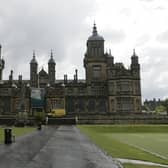
The Old Bishop Palace. Ripon
A Dr Barnardo's Concentration Child Slave Camp.
1960s.

SPRINGHILL SCHOOL> RIPON.
Dr Barnardo's Charity Home for Vulnerable Children.

Where did all those beautiful Vulnerable children go.????. Stolen for the Empire. May be one day another generation will write of their great work helping to keep the lands for England. A Grave Here another Grave there. what lands will be nexts to hear


Comment on this Story


In order to post comments you must Register or Sign In


Sister Newspapers:
Press Complaints Commission

This website and its associated newspaper adheres to the Press Complaints Commission’s Code of Practice. If you have a complaint about editorial content which relates to inaccuracy or intrusion, then contact the Editor by clicking here.

If you remain dissatisfied with the response provided then you can contact the PCC by clicking here.